5. 10. 2026
Minimum wage in 2027: impact on taxes and health insurance


News & blog
The Government has submitted to the Chamber of Deputies a bill intended to reintroduce the registration of sales while simultaneously amending certain rules relating to income tax and VAT. If approved, most of the changes should become effective as of 1 January 2027. The bill is still in the legislative process, and its final wording may therefore change.
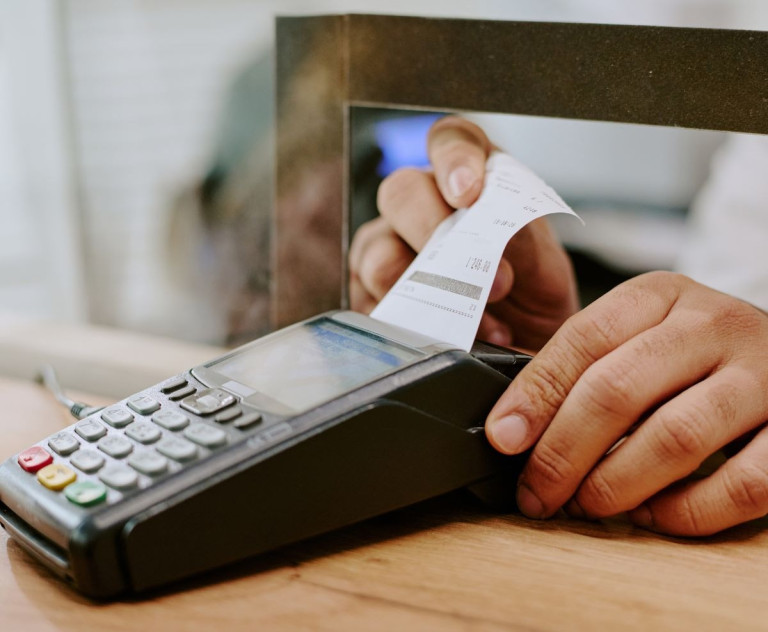
The new registration of sales should apply to personal income taxpayers and corporate income taxpayers if they receive registered sales within the territory of the Czech Republic. A registered sale should primarily mean a payment that meets the formal requirements and constitutes decisive income. The proposal is not limited to cash payments only; it also includes selected cashless payments, payments made using virtual assets, cheques, or similar methods.
Before accepting their first registered sale, entrepreneurs will be required to obtain a certificate through the tax information box and report details regarding registration units, such as establishments, e-shops, applications, or vehicles. Information on sales should be transmitted to the tax administrator in the form of an XML data message. In the event of an outage or exceeding the response time limit, the data must be sent no later than within 48 hours.
The proposal also provides for exemptions. Registration should not apply, for example, to certain public-law entities, selected financial institutions, sales from vending machines, or certain regulated activities. A special option should also be available for smaller self-employed individuals under the flat-rate tax regime. If they fall within the first flat-rate tax band and their income from self-employment in the previous year did not exceed CZK 1 million, they may opt for a monthly surcharge of CZK 1,400, which will exempt them from the obligation to register sales. A fine of up to CZK 500,000 may be imposed for breaches of obligations relating to the registration of sales. Supervisory authority should be exercised by the Financial administration and, in certain cases, also by the Customs administration.
The proposal also includes amendments to the income taxes act. It envisages the reinstatement of the student tax relief in the amount of CZK 4,020 per year and the reintroduction of the tax relief for the placement of a child in a preschool facility. This relief should correspond to demonstrably incurred expenses, up to the amount of the minimum wage per child. In connection with the registration of sales, a tax relief for the registration of sales of up to CZK 5,000 should also be introduced. It should only be possible to claim it in the first taxable period in which the taxpayer registers a sale for the first time under the new regulation. However, the actual amount of the relief will depend on the partial tax base from self-employment activity.
The proposal further amends selected employee benefits. In the case of recreation and package holidays, the exemption should be limited to CZK 20,000 per year. In the case of social, cultural, and sporting events organised by the employer, the exemption should be conditional, among other things, on customary practice and reasonableness. For restaurant operations, the proposed amendment concerning tips is also significant, as under certain conditions tips should be exempt up to a limit derived from the employer’s monthly income from catering services.
In the area of VAT, the proposal primarily targets restaurant services, bad debts, and VAT deduction on passenger cars. For restaurant services, a simplification of VAT rates for selected non-alcoholic beverages and drinking water is proposed. When served as part of a catering service, these items should fall under the same regime as the catering service itself, i.e. the reduced VAT rate. In practice, this could simplify accounting in restaurants, cafés, and similar establishments.
Another change concerns the adjustment of the tax base for smaller bad debts. The limit for an individual receivable should increase from CZK 10,000 to CZK 20,000, and the waiting period should be shortened from 6 months to 3 months. For entrepreneurs with a larger number of smaller unpaid invoices, this may represent a practically significant relief. The proposal also abolishes the restriction on VAT deduction for selected passenger cars. Companies planning to acquire more expensive vehicles should pay particular attention to the effective date of the new regulation and the transitional provisions.
The proposal is not merely a “return of EET”. It introduces a broader package of changes that may affect self-employed individuals, employers, restaurants, e-shops, and companies acquiring passenger vehicles. We therefore recommend verifying in advance whether the registration of sales will apply to you, what types of payments you accept, whether you fall within any exemption, and whether it will be necessary to modify your cash register system, internal processes, or employee benefit settings. The final wording of the law may change during the legislative process.
Would you like to know which changes will affect you specifically and what adjustments will need to be made in practice? Contact us, we will review the impacts with you and help you prepare in time.
Author: Jaroslava Ševčíková - Tax Assistant